

For Her Eyes Only
Chapter 1
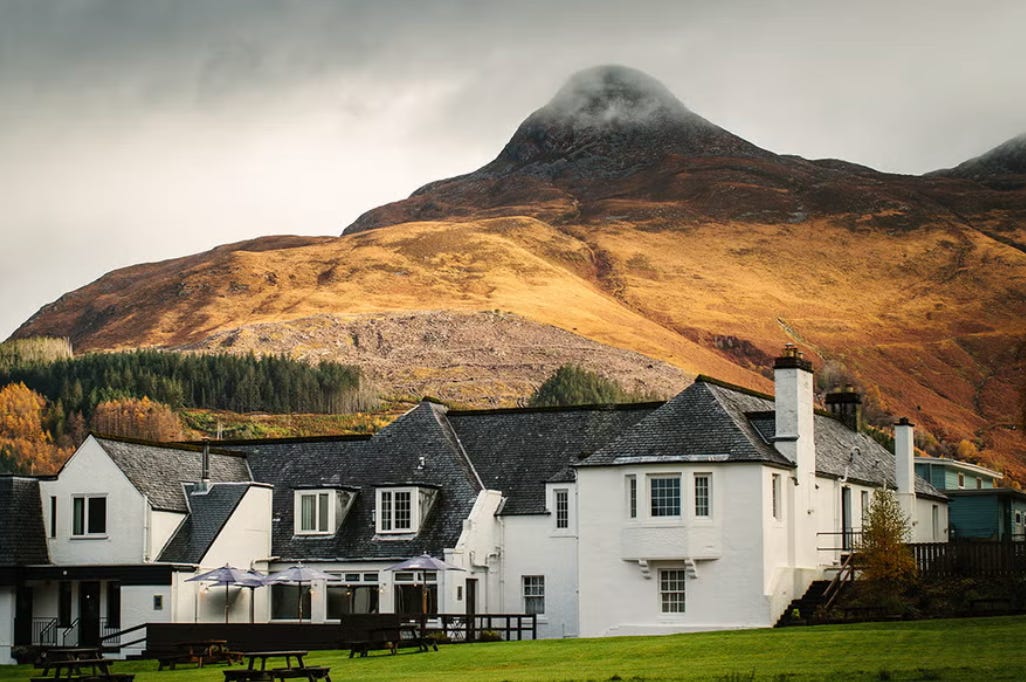
Finn Colpher gripped his leather satchel tightly as the taxi lurched over another pothole, his knuckles white against the worn handle. The road had narrowed to a gravel track barely wider than the vehicle, winding through the mist-shrouded hills like a ribbon laid by trembling hands. The driver hadn’t spoken in twenty minutes, except for a low grunt when they passed the last proper house in the gathering gloom of late afternoon. Since then, only sodden sheep had borne witness to Finn’s journey through the dark hills hunkered down over the waters of the loch.
Declan curled up close beside him on the back seat and gave a low, hopeful whuff, thumping his tail once against the seat. It was more optimism than Finn could manage. There’d been a bad moment after fetching the golden labrador from the vet in the village when the cab he’d called had straight up refused to drive them out to Dun Roamin.
“I’ll nae be ‘aving that furry shitebag along,” the driver informed him, and no amount of pleading or bribery would budge him from his refusal.
There being only two taxis in the village of Wee Jasper, and not an Uber to be found for love or money, Finn had begun to worry he’d have to leave Declan with the vet again until he could figure out a way to get him home.
And the kennel fees for Dec’s first stay had all but cleaned him out of spare funds.
“Road’s a bit rough,” he remarked to the driver, his voice cautious, as though speaking too loudly might spook the hills.
The man gestured vaguely. “Yeah.”
It sounded more like ‘Yaar’, and Finn nodded. At least this terrifying old seadog had agreed that the dog could ride along. Indeed, the driver had tried to tempt Declan into the front seat by crinkling a packet of salt and vinegar crisps at him. Sadly, the packet was empty, and Declan was partial to pork rinds, so into the back seat with Finn, and Finn’s strategically hoarded packet of pork rinds he climbed.
As they drove deeper into the hills, the sky darkened with heavy, charcoal grey clouds rolling in from the north. The wind whistled through the narrow valley, stirring the tall grasses and adding a malevolent aspect to a landscape that had seemed merely indifferent to his fate an hour before. The distant rumble of thunder arrived, and raindrops began to patter against the taxi’s windows, blurring the scenery into a watercolour of shadowy greens and greys.
Declan sat up, tail swishing. Finn scratched behind his ears, more to comfort himself than the dog, his fingers finding the soft, familiar groove above his collar.
“I hope you know what we’re doing, old boy,” he murmured. “Because I haven’t the first bloody clue.”
“Yaar,” the driver agreed.
A minute later, the cab rolled to a stop with a gravelly sigh, the old inn looming out of the mist like it had been waiting for him. Which, Finn supposed, it had.
He stepped out, boots crunching on damp stone. The air smelled of wet earth and salt, of heather and something deeper, peat smoke, maybe. And memory. Wisps of fog curled around the corners of the building like spectral fingers, and the air was thick with an unpleasant chill that crept in everywhere his skin was exposed. Cracked windows stared vacantly back down the valley, and vines twisted around the crumbling stone facade. Only one window glowed faintly in the gathering dusk. The rest were blind.
Finn paid the driver, tipping him for allowing Declan along, even though he’d raised no objection.
Dec bounded out and trotted up the narrow path to the front door. He, at least, was home.
Finn followed, dragging his suitcase over a root that had muscled its way up through the flagstones. He caught sight of the hand-carved wooden sign still swinging slightly above the doorway. “Dun Roamin”, carved deep into the timber by his grandfather’s steady hand decades ago.
He remembered ‘helping’ with that sign. Mostly by handing up beers and fishing Grandbob’s cigarettes from the pocket of an old waxed jacket while he worked the chisel like a surgeon, swearing softly at every knot in the wood. Finn had been six, maybe seven, sticky with lemonade and bursting with pride at being deemed so very useful.
The sign was weathered and cracked, the paint flaking at the edges, but the letters still held their shape.
“Wait, wait, Dec, hang on,” Finn said, “Don’t barge in. We don’t own the place yet.”
But, of course, they did. Or at least, he did now.
Finn reached the door just as Declan nudged it with his nose, and the taxi drove away. The door opened with a groan that sounded like a dying man’s attempt at confession.
Inside, the inn smelled of dust and old wood, with a strong hint of dog. Declan trotted in confidently and curled up in front of the hearth where a small fire burned.
Finn followed more cautiously. His grandfather was six weeks gone. The old boy had been a devil with a damp campfire and a flint, coaxing warmth and light from the most unpromising of circumstances. But six weeks was six weeks, and even the memory of Robert Colfer could not keep a home fire burning that long without fuel.
Did Finn have a squatter?
Or something worse?
The common room was dim, lit only by the flames. Furniture crouched in the gloom: mismatched armchairs, a tartan loveseat, and a grandfather clock that had not kept time since Finn was a boy.
He ran a hand through his thick black hair, dislodging a few raindrops, and looked around. Nothing had changed. That was the strangest thing. Not the dust, not the smell. Not—
A floorboard creaked upstairs.
Declan lifted his head.
Finn froze.
Then a second creak, heavier this time.
He reached instinctively for the fire poker leaning by the hearth. The handle was cold in his grip, the iron solid and stupid.
“I swear to God, Declan,” he whispered, “if this place is haunted…”
A figure appeared at the top of the stairs. Silhouetted against the last light of the day, the man was barrel-chested and knock-kneed. Not short but a little stooped, he wore a thick cardigan the colour of dried heather and tartan slippers that slapped softly as he descended.
“Christ,” Finn muttered, heart hammering against his ribs. “You scared the… Wait, who—”
The man looked up, revealing a face creased with lines so deep they could’ve been carved by the wind. A thick shock of wiry ginger-grey hair stood straight up from his scalp, like he’d been born with a crew cut. His eyes, however, were sharp and watchful, a bright steel blue that pinned Finn like a butterfly to glass.
“Yer Robert’s lad then,” he said in a voice like old paper. “The clever one. The book reader.”
Finn blinked. “Yes? I mean, yes, I’m Finn. Colfer.”
The old man nodded once, slowly.
“I’m Jock.”
There was a long pause.
Finn lowered the poker.
“Do you… live here?” he asked. “In… my house?”
“Aye. Room at the back. Your grandfather needed some help last year, and you were reading your books, weren’t you?”
“Oh, I just…”
Finn didn’t know what to say. His grandfather’s death had come as a shock. Old grandbob was a bull of a man. He hadn’t breathed a word about his cancer to Finn or to Finn’s parents down in Australia, and the first they knew of his passing was the vet’s assistant calling Finn at Cambridge to ask who’d be coming to pick up Declan and how they preferred to settle the bill.
“Well,” Finn said, setting the poker back down, “It was a surprise. Grandbob, I mean grandad going like that. I used to call him every week, you know. He never said a thing about…”
He trailed off again. As though invoking his grandfather’s cancer by name might invite it back in.
Jock smiled, just barely. “He said ye’d come. Tol’ me, when the time came, it’d be you. Not yer da’. Said he didnae trust him tae care for the old place. He didnae have the heart for it.”
Finn swallowed. “Well, he and Mum are a long way away, you know. Working in Australia and everything.”
Jock stood by the hearth for a moment, eyeing Finn like a man who’s just been handed a three-pound note at the local betting shop. Then he nodded to himself and turned back toward the shadows beyond the common room.
“Come on then, book boy,” he said. “Might as well see what’s left of the place.”
Finn hesitated, just for a second. Then he gave Declan a quick pat and left his suitcase and satchel by the door to follow the old man through a crooked archway. Old oil paintings lined the corridor, landscapes mostly, but some faces, too, here and there. Ancestors perhaps. Or strangers who’d never left. Mildew had crept over all of them like a second canvas.
“Had a burst pipe in March,” Jock offered casually. “Ceiling came down in two of the rooms upstairs. The one yer da’ liked is full of the black mould now. Gets in yer lungs, that stuff. All the way down.”
Finn shied away as a cobweb brushed his cheek.
They passed a kitchen that looked like it had last seen real use around the time ration books were a thing. A cooker with a rusted hob. A sink stained with iron. A row of shelves bowed under the weight of unopened tins and ancestral dust.
“I’ll… get right onto this,” Finn said weakly.
Jock gave him a look. “Aye,” he said. “And I’ll grow wings and join the Red feckin’ Arrows, just see if I don’t.”
Jock turned to him and said, not unkindly. “Yer grandad left you a ruin with ghosts. The only thing you need to get right onto is a bottle. And then a train back to college, I’d suggest.”
“I don’t really drink,” Finn said.
“That’s the first thing we’ll change, then.”
They emerged in the old public bar at the far end of the house. The long wooden counter was cracked and peeling under a thick layer of dust, the brass foot rail tarnished into a dull, spotted green. Behind it, empty shelves gaped like broken teeth.
“Used to take a wee dram here,” Jock said, gesturing to the bar’s back wall. “But the Romanians took all of that.”
Finn blinked. “The… Romanians?”
“Aye,” Jock said. And said no more. Then, after a pause, “The Laird’s Left Boot will have us, if you’ll be in want of a drink then.”
“I… honestly, yes.”
Finn considered the wreckage of Dun Roamin. The smell of mildew and dog and disappointment.
“Come on then,” said Jock, turning. “We’ll bring the hound. He’s been kicked out of far better places than the old boot.”
* * *
The rain had intensified, turning the gravel path into a slick ribbon of mud. Finn stood under the sagging porch, watching as Jock wrestled with a tarp covering his grandfather’s motorbike. A Triumph with a sidecar that had seen better centuries.
Declan trotted over, tail wagging, and hopped into his usual spot with the ease of long practice. He turned in a circle, settled down, and gazed expectantly at Finn.
Jock handed Finn a battered helmet.
Finn eyed the machine. “Is it... safe?”
Jock snorted. “Safer than the pub we’re off tae. Hop in.”
It looked like a rusting Frankenstein sculpture of metal and memory. The sidecar alone appeared to have weathered at least three world wars. Finn glanced at Declan, already settled into his place, and then at Jock, helmetless and utterly unburdened with concern.
Finn had thought he was past worrying about what people thought of him. But he felt himself judged by an old Scottish madman in tartan slippers he had not bothered to change and a dog who looked incredibly smug about the fact that he had taken the best spot in the sidecar. Meanwhile, Finn was consumed with calculations of how long an ambulance would take to get up from Aberdeen.
With a sigh that was more resignation than agreement, he climbed into the sidecar beside Declan.
The dog didn’t even glance at him, merely thumping its tail as Jock kicked the bike to life, the engine roaring like a beast stirred from slumber. They lurched forward, tyres briefly spinning before finding traction, and then they were off, plunging into the storm.
The road to Wee Jasper wound along the cliff’s edge, hugged by the dark churning mass of sea below. Finn clung to the sidecar, knuckles pale, as the wind whipped at his coat and the rain stung his face. Lightning flashed, illuminating the jagged rocks and frothing waves. Thunder followed, a deep rumble that seemed to shake the very earth. Declan sat serenely, ears flapping in the wind, as if this were just another evening ride.
“Oh my God, you’ve done this before,” Finn said accusingly.
The dog did not reply.
After eight minutes of terror, they descended into the seaside village, a cluster of stone buildings huddled together against the fury of the North Sea. Lights glowed warmly in the windows, and laughter and music spilled faintly into the street.
Jock pulled up in front of a building with a crooked sign swinging above the door: The Laird’s Left Boot. The sign depicted a well-worn boot overflowing with frothy ale.
It didn’t give Finn any confidence about the establishment’s hygiene standards.
They pushed through the door, and the pub erupted with light and sound, a deafening roar of voices, clinking glasses, and the occasional burst of song. The air was thick with the scent of peat smoke, spilled beer, and damp wool, and the room was packed, mostly with burly blokes in rugby jerseys, their faces flushed from drink and the exertion of shouting for more drink.
Finn stepped all the way inside.
And then he saw her.
She stood at the far end of the bar, a shot glass in hand. She seemed the only patron impervious to the storm raging outside and in. Thick, blonde hair gathered around her collarbones. Her posture was relaxed, but there was a tension in her eyes, a watchfulness that set her apart from the revelry around her.
She was striking, not only in appearance but in presence. She seemed to command the space around her effortlessly, and oddly, very oddly, that space was… empty. She was a remarkably good-looking woman. Not the only one in the room, of course. The more he looked, the more he realised the rugby lads were attended by a crowd of glassy-eyed screamers in Boden warp dresses.
Only this woman stood on her own. As if none dared even look at her, let alone approach and try their luck.
Finn stared, momentarily forgetting the cold, the rain, the dog at his side.
She wasn’t his type at all. Let the record show that Finn Colpher was a proven fool for doom-swathed, ink-smeared she-creatures who smelled faintly of clove cigarettes, Zadie Smith, and podcast Marxism. As sad as he was for his lost grandbob, he knew he’d move on soon. But three years after her perfectly choreographed betrayal-by-lamppost, he was still grieving for his last great love, Sativa, a moody Gothic vegan in a corset who translated de Beauvoir into emojis for her Master of Arts thesis.
The blonde woman at the bar looked as if she might hand-roll Sativa’s MA into a really tight joint and light it up with a match scraped across the sole of her boot, solely to have something to flick into your eye if she caught your imagination taking liberties with her from across the room.
And then she looked over the rim of her whisky and caught Finn Colpher staring.
“Oh God. I’m sorry,” he mouthed.
But he had no idea what she did next because one of the rugby boys punched him in the side of the head.
You are such a fine writer, John. And you've taken to the genre with gliding ease! Looking forward to the next chapter!